


This year marks a major leap forward in design technology with the evolution of the Autodesk Assistant, an AI-powered companion embedded across Autodesk’s ecosystem.
From Help Tool to AI Co-Creator
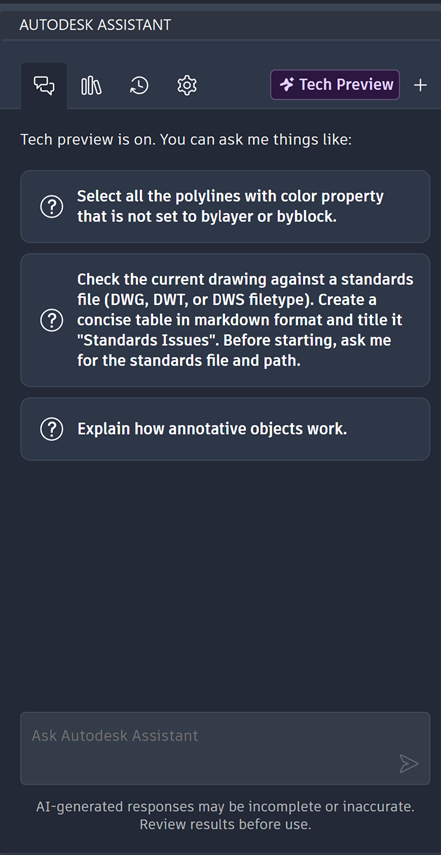
Initially introduced as a conversational support tool, Autodesk Assistant has evolved into what Autodesk describes as an ‘agentic AI partner‘, capable of understanding user intent, coordinating tasks and executing workflows autonomously.
In Autodesk Inventor 2027 and other flagship tools, the Assistant now behaves less like a help feature and more like a collaborative teammate. Designers can simply type or speak commands such as:
- ‘Analyse this model for manufacturability’.
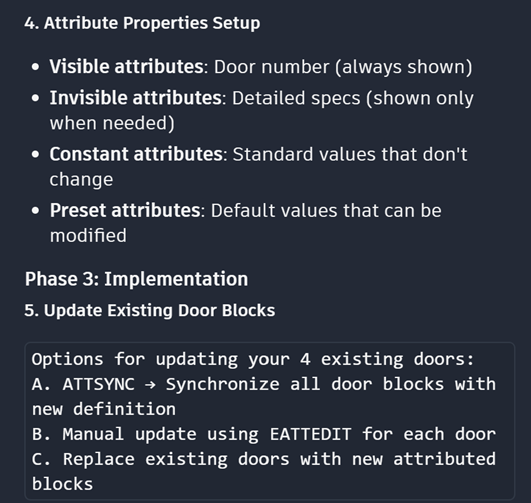
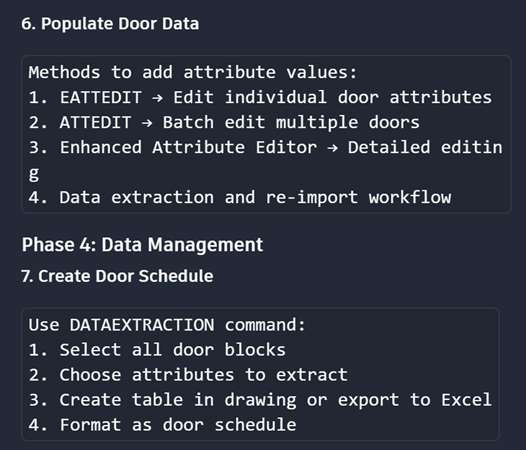
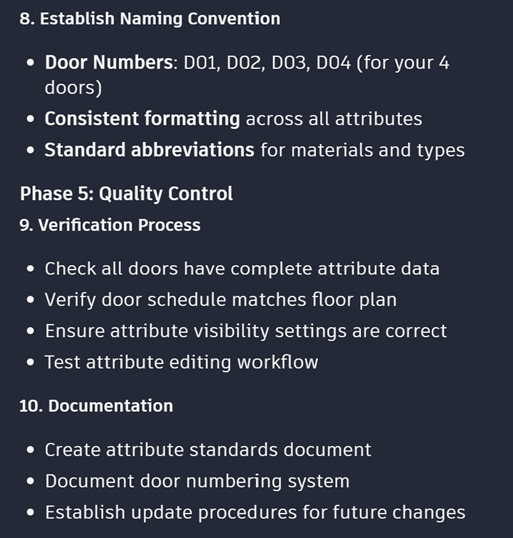
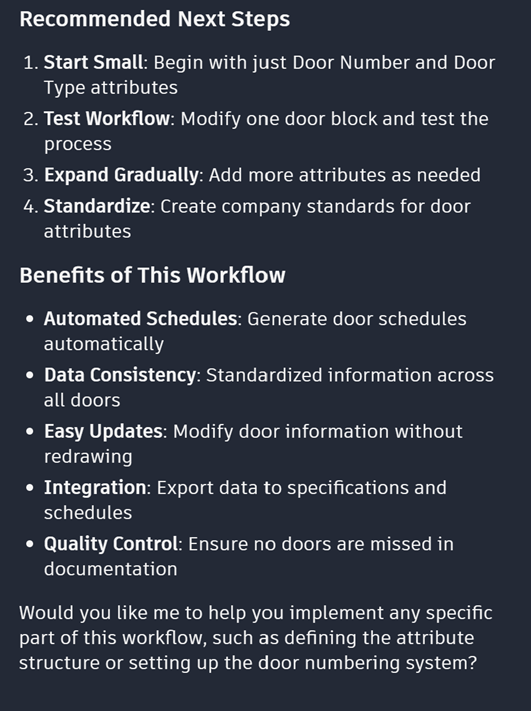
- ‘Create a door schedule’.
- ‘Check this drawing against CAD standards’.
And the Assistant executes these tasks in real-time.

Key Features
1 – Natural Language Design Control
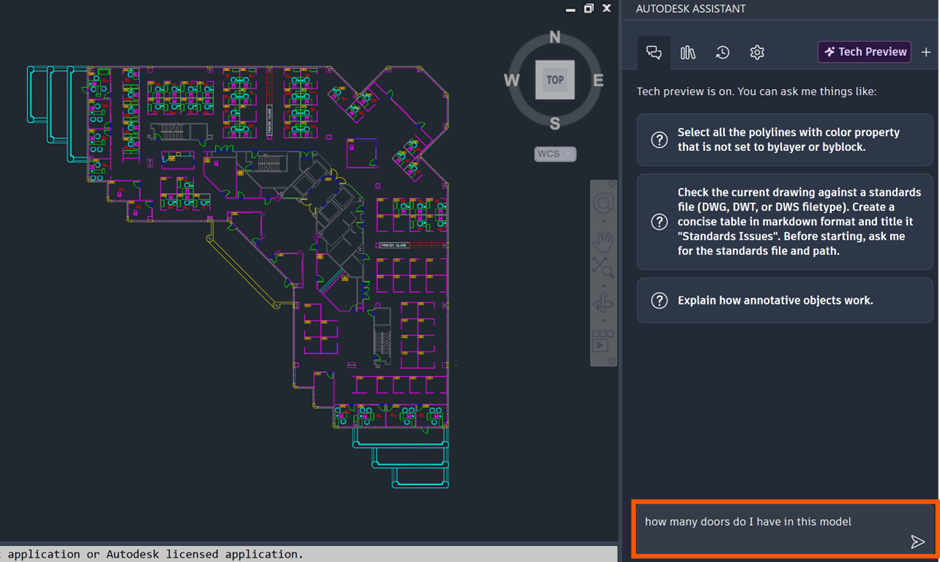
One of the most impactful features is the ability to interact with complex design environments using plain language. Instead of navigating menus or switching scripts, users can issue commands conversationally. This enables actions like the below, all without manual configuration:
- Generating parameters.
- Suppressing components.
- Create model sates
Result: Dramatically reduces learning curves and faster execution of tasks.
2 – Real-time AI Execution Inside Workflows
Unlike traditional AI tools that provide suggestions, Autodesk Assistant actively performs tasks within the software. It can:
- Modify models.
- Run simulations.
- Automate repetitive processes.
- Execute multi-step workflows from a single prompt.
Result: This ‘ask – confirm – execute’ model ensures both speed and control.
3 – Context-Aware Intelligence
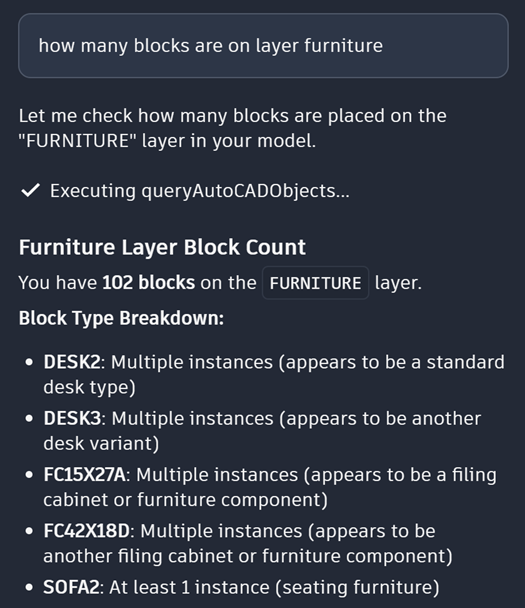
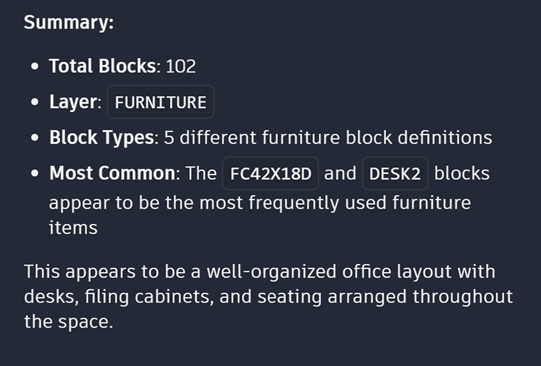
Autodesk Assistant understands not just commands, but context, including your model, project data and workflow stage. For example:
- It validates drawings against company standards.
- It validates information in the drawing.
Result: This contextual awareness allows it to deliver highly relevant and actionable insights.
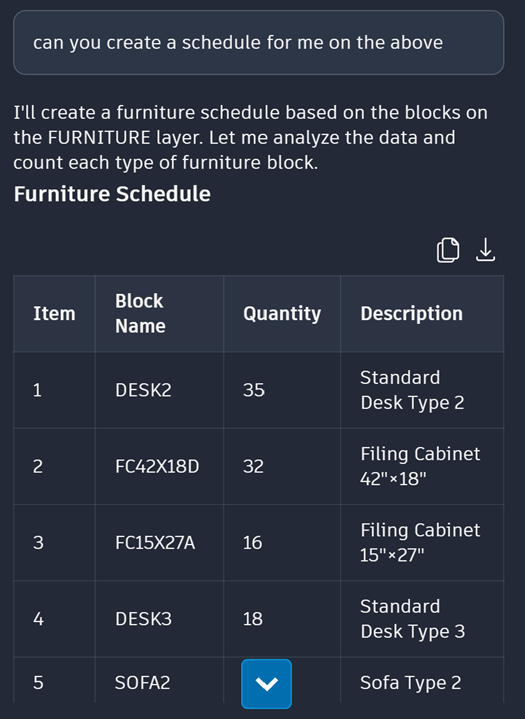
4 – Cross-Platform Integration
Autodesk Assistant is not limited to a single tool, it works across multiple products like Fusion, Revit, AutoCAD, Civil 3D and Vault. it integrates seamlessly into existing workflows meaning:
- No switching between apps.
- Unified access to project data.
- Consistent AI experience across disciplines.
Result: This creates a connected design ecosystem powered by AI.
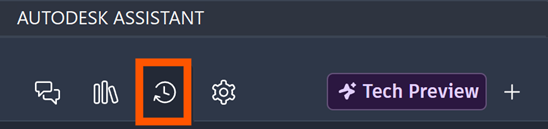
5 – Automation Without Coding
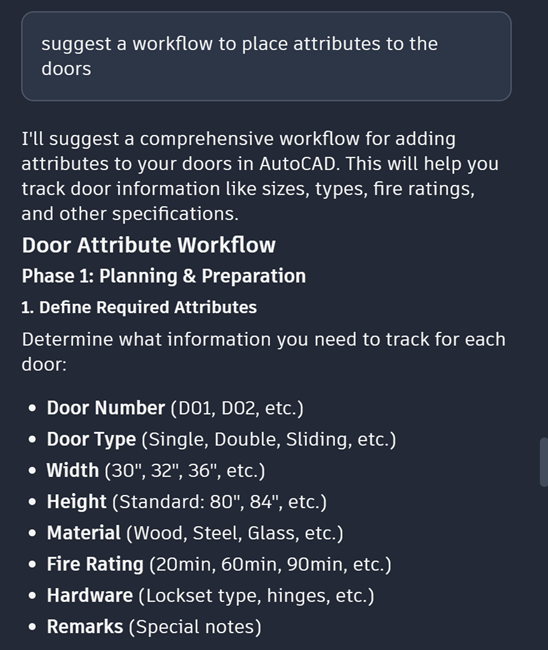
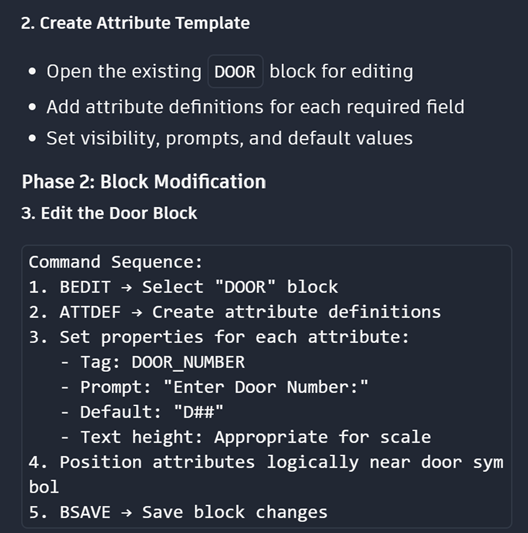
Previously, automation required scripting or tools like iLogic. In 2027, Autodesk Assistant enables automation through simple prompts. Users can do the below all without writing code:
- Set up projects.
- Manage permissions.
- Generate reports.
- Build workflows.
Result: This democratises advanced capabilities for non-technical users.
6 – Predictive Insights and Decision Support
Autodesk Assistant goes beyond execution, it also helps users make better decisions by:
- Analysing project data.
- Identifying risks early.
- Providing tailored recommendations.
Result: These predictive insights improve efficiency and reduce costly errors.
7 – Secure, Controlled AI Environment
Despite its autonomy, Autodesk Assistant operates within strict guardrails:
- Respects user permissions.
- Keeps data within secure environments.
- Confirms actions before execution.
Result: This ensures trust and reliability in professional workflows.
Some early users have describes it as both transformative and controversial, highlighting the need for balanced use alongside human expertise.
The Future of Design with AI
Autodesk Assistant represents a shift from tools to collaborators. It signals a future where:
- AI handles execution.
- Humans focus on creativity and strategy.
- Design becomes faster, smarter and more accessible.
As Autodesk continues to expand its capabilities, the Assistant is likely to become the central interface for interacting with design software, bridging the gap between human intent and digital creation.
The Autodesk Assistant in 2027 is more than just a feature, it’s a paradigm shift in how design software is use. By combining natural language interaction, real-time execution and intelligent insights, it transforms workflows across industries.
In a world where speed, precision and innovation are critical, Autodesk Assistant positions itself as an indispensable partner, helping professionals not just design better, but think differently about the entire creative process.
Still got Questions?
Buy Software
Autodesk is a global leader in software for architects, builders, engineers, designers, manufacturers, 3D artists and production teams. Contact us now to find out which software is right for you.
Contact Us
We are here to ensure you receive a consistently high service and quality solutions for your business needs. We promise you won’t regret speaking to us, and if we can’t help you, we will try to find someone that can.