


Some cities host events. Others become part of them.
Porto belongs firmly to the second category. It does not try to impress through spectacle. It reveals itself gradually, through the steady rhythm of the Douro, the layered façades, the texture of its streets, and the sense that everything has been built with intention rather than haste. There is a calm confidence to the city that made it an especially fitting setting for the buildingSMART International Summit Porto 2026.
That feeling became even stronger at the Alfândega do Porto. Sitting directly on the riverfront, the former customs house carries a quiet symbolic weight. It was originally designed to control flows, register movements, verify goods and manage complexity. Today, it hosts conversations about information, interoperability and digital transformation. The medium has changed, but the challenge has not. It is still about structure, clarity, control and trust.
Over two days, the Summit brought together global leaders, innovators and decision makers from across the AECO industry. Representing Man & Machine UK, Richard White and Diana Bela Novo attended the first two days, engaging directly with discussions around openBIM, interoperability, certification, information management and the next phase of digital transformation. What became clear very quickly was that this was not just another BIM event. It was a very precise reflection of where the industry stands today, where it is progressing, and where it is still falling short.
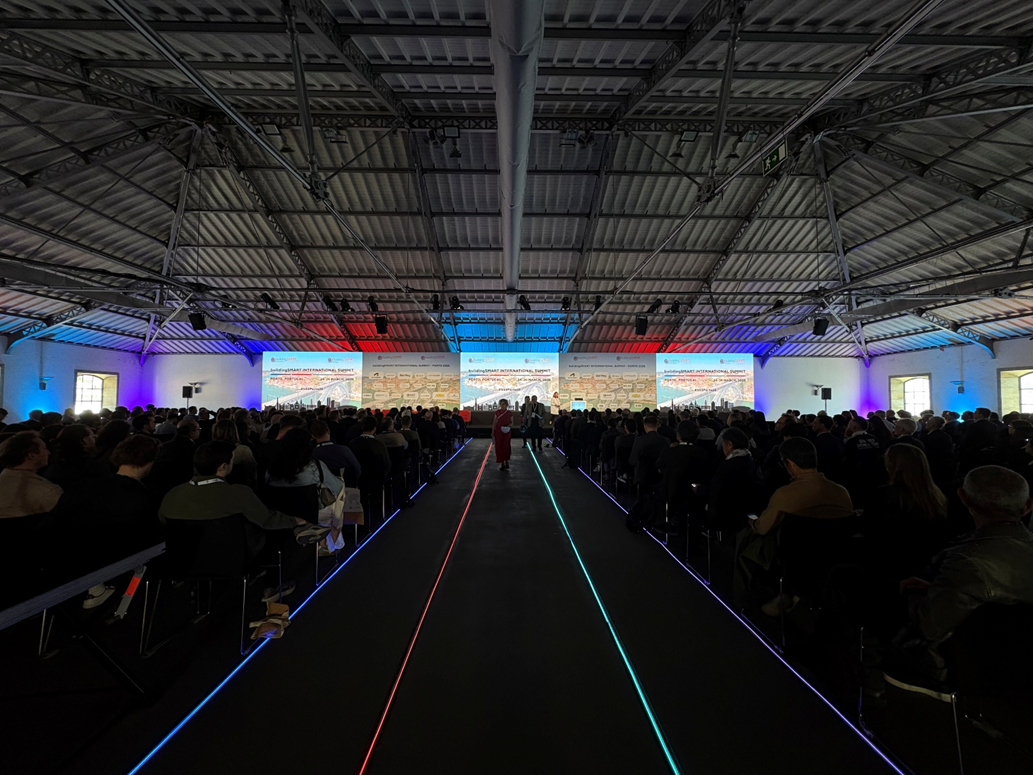
Day 1: Strategy, scale and the reality of adoption.
The Summit opened with Bridging the Future with openBIM, bringing together Dan Little, José Lino, Aidan Mercer, Miguel Azenha, José Granja, Marco Lima Carvalho and Frederico Ramos. More than an introductory panel, it set the tone for the whole event: openBIM is no longer optional, and BIM itself is no longer the goal, but the starting point for a data driven ecosystem built on structured information, governance and interoperability.
José Lino highlighted Portugal’s growing role in digital transformation, while Miguel Azenha showed how academia is actively shaping practice through research, innovation and contributions to standards such as CT197. José Granja reinforced a key idea that echoed throughout the Summit: the industry does not lack knowledge, but struggles with its structured application. Frederico Ramos then framed the industry trajectory as BIM → Structured Data → Open Standards → Automation → AI, making it clear that AI depends entirely on information being properly structured, interoperable and usable. The session also introduced GaiaCity3D, showing how IFC based submissions, semi-automated compliance checking and Urban Digital Twins are pushing permitting processes from documents towards data driven validation.
The morning continued with Global Perspectives: Trends That Are Driving the Industry, moderated by Maria Benitez, with Dashuang Li and Magdalena Pyszkowski, followed by a panel with Rebeca Herrera, Erik Poirier, Talita Dal’Bosco Re, Tomi Henttinen, Maud Guizol and Gerard van der Veer. Dashuang Li’s presentation on the Xiong’an High Speed Rail project showed that at infrastructure scale, fragmented information becomes a real delivery risk, while Magdalena Pyszkowski’s concept of Open Intelligence clarified that AI does not replace standards, but depends on structured and reliable data.
In the afternoon, openBIM Today and Tomorrow, moderated by Rodrigo Koerich, focused on how standards are evolving from concepts into scalable systems. Wei Lai, Evandro Alfieri and Tom van Diggelen explored how IFC, IDS and bSDD are being refined to support real workflows, with particular emphasis on moving away from file based exchanges towards continuous, data driven environments. Tom van Diggelen’s discussion of the narrow waist architecture and the shift from federated models to federated data highlighted the need for a shared data layer that reduces complexity and improves interoperability. The hackathon contributors, Artur Tomczak, Mário Coelho, Helga Tauscher, David Delgado Vendrell and Daniel Chantlos, added a more experimental dimension, showing how rapid prototyping is already helping shape the future. The day concluded with Driving Interoperability Through Adoption, moderated by Aidan Mercer, with Peter Rabley, Will Sharp and Will Holmes, followed by a panel including Jugal Makwana, Alan Esguerra, Jeffrey Avina, Marc Nezet, Chris Jackson and Michelangelo Cianciulli. Peter Rabley addressed the gap between strategic intent and implementation, while Will Sharp and Will Holmes showed how U.S. transportation projects are making interoperability a contractual requirement rather than a recommendation. The final panel reinforced one of the clearest messages of Day 1: the biggest challenge is not technology, but alignment between organisations, processes, expectations and the wider supply chain.
Alongside all of this, the Bridging the Future Challenge ran throughout the event and deserves far more than a passing mention. At first glance, it looked like a light, almost playful activity based on collecting stickers. In reality, it was a carefully structured layer of engagement running in parallel with the Summit itself. Participants had to attend sessions, interact with sponsors, engage with the wider community and complete specific actions in order to validate their progress and collect the relevant stickers. It was simple on the surface, but very intentional in its design.
What made it particularly interesting was how closely it mirrored the very themes being discussed inside the sessions. It was about participation, validation, progression and completion. It created a visible and tangible way of moving through the event, almost like a small scale version of a structured workflow. In that sense, the sticker challenge was not just a side activity. It became part of the experience and, in a subtle way, reinforced the Summit’s wider message about process, checkpoints and follow through.
Throughout the day, the scheduled pauses proved valuable not simply as breaks, but as opportunities to reconnect with familiar faces, exchange ideas, share perspectives from different markets, continue conversations in a more candid way and strengthen professional relationships. Some of the most useful reflections happened there.
Day 2: Fundamentals, implementation and practical workflows.
The second day began with the buildingSMART Professional Certification Foundation refresher, the PCert Crash Course, which brought the focus back to fundamentals such as roles, responsibilities, information requirements, Common Data Environments and the practical meaning of standards like IFC, IDS and bSDD. It was a useful reminder that many industry problems do not stem from complexity, but from an inconsistent understanding of the basics. It also reinforced the value of certification in creating more aligned and competent teams.
The morning continued with the Building Domain project and activity updates, one of the most strategic technical sessions of the event. The session covered ongoing buildingSMART work around Asset Operations Handover, IoT interoperability, Fire Safety IDS, IFCie and the use of bSDD for elevators. Nicholas Nisbet introduced IFCie and developments around asset information and handover, highlighting the importance of structured, reusable and machine interpretable information between delivery and operation. The session also showed how modular IDS components, dynamic BIM linked data and classification systems are supporting more practical, interoperable and compliance driven workflows.
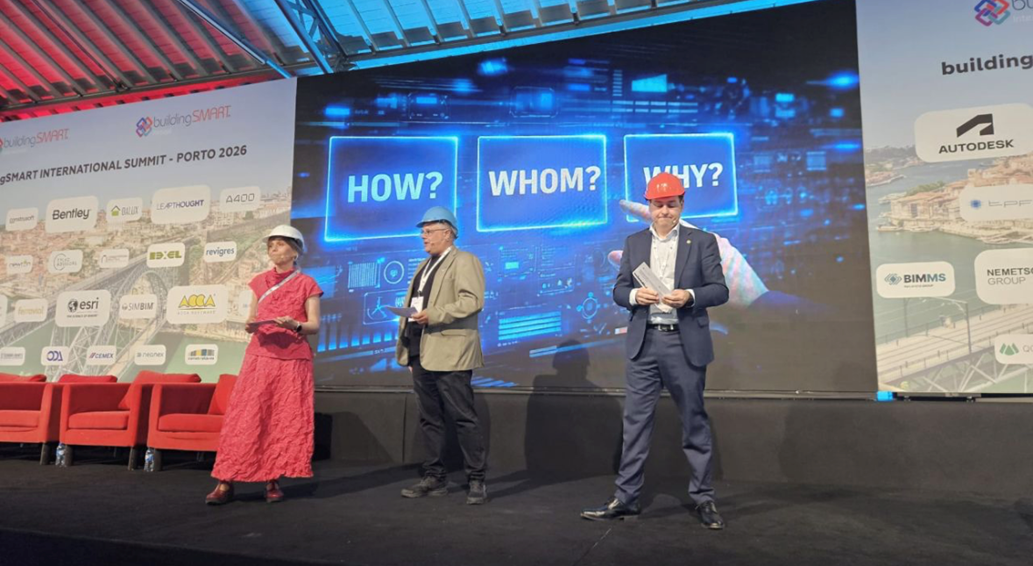
In the afternoon, Unlocking the Power of openBIM Standards brought together Andrea Ferrara, Muataz Safaa Abed Albadri, Håvard Bell and Guilherme Nascimento in one of the strongest practical blocks of the Summit. Andrea Ferrara presented a structured verification workflow using IFC, IDS and BCF, turning model checking into a traceable and governed process. Muataz Safaa Abed Albadri demonstrated increasingly automated Scan to openBIM workflows, showing how point clouds can be transformed into IFC models with growing efficiency. Håvard Bell focused on BCF API and openCDE API, reinforcing the shift from file exchange to connected systems. Guilherme Nascimento concluded with public sector examples from Brazil, showing how open standards and open source tools can make BIM adoption more accessible and scalable.
The technical programme concluded with The Building Information Management Game, an interactive session translating ISO 19650 principles into a collaborative exercise. By mapping roles, project stages and information deliverables, participants quickly encountered the same familiar problems seen in real projects: unclear responsibilities, missing information and misaligned expectations.
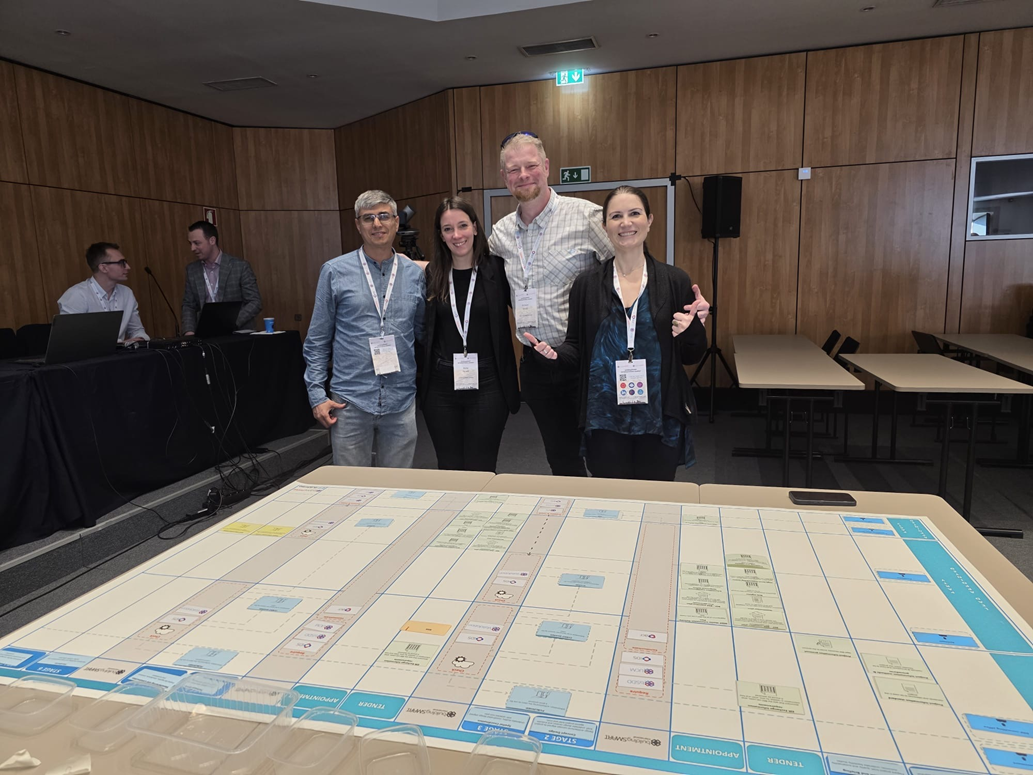
That was exactly why the session worked so well. It showed, very directly, that most of the industry’s recurring problems are not caused by a lack of tools or standards. They are caused by weak organisational alignment.
The event then moved out into the city with the Treasure Trail, a mobile based route through Porto that took participants from the Alfândega through landmarks such as Ferreira Borges, São Bento, Bolhão, Capela das Almas, Clérigos and Porto City Hall. What seemed like a social activity also mirrored the Summit’s core logic: checkpoints, validation, sequencing and progression. Information only becomes useful when it guides action.
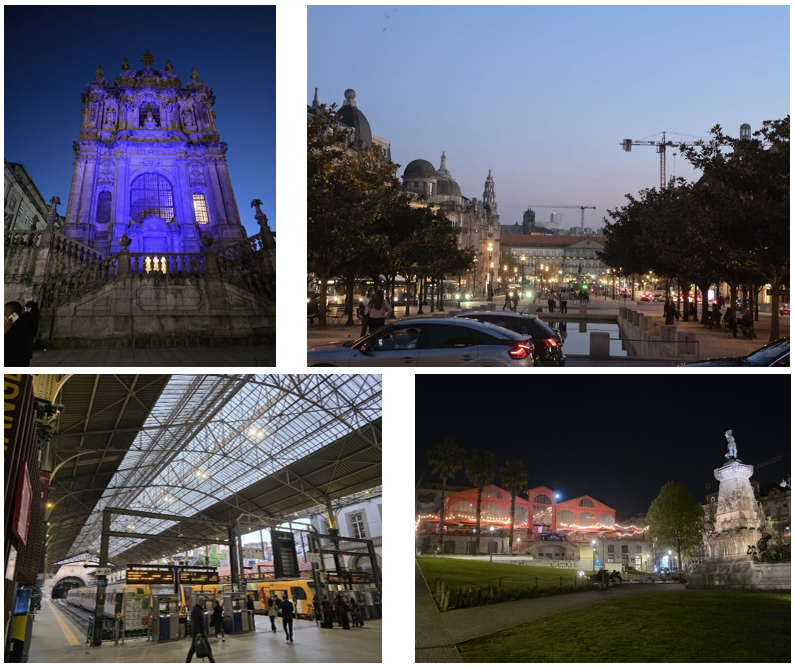
As on the first day, the pauses between sessions created valuable opportunities for networking, reconnecting with known faces, sharing ideas more openly and reinforcing professional connections. These moments gave the event a more human dimension and helped translate the technical content into shared experience.
Final reflection!
By the end of the buildingSMART International Summit Porto 2026, one thing had become very clear.
The industry already has the standards. It already has the tools. It already has the frameworks. It already has the knowledge.
What remains inconsistent is how all of this is applied in practice.
That is why the event felt important. Not because it promised some distant future, but because it described the present with unusual clarity. The real challenge is no longer technological. It is organisational. It lies in how consistently people, processes, responsibilities and expectations are aligned around information.
And perhaps that is why Porto felt like exactly the right place for this conversation.
It is a city that does not rush. It builds with intention. And that is still precisely what this industry is learning to do.
Still got Questions?
Book Training
Our BIM Ready training programme is aligned to the buildingSMART Certification programme and provides professional development on information management in the built environment.
Contact Us
We are here to ensure you receive a consistently high service and quality solutions for your business needs. We promise you won’t regret speaking to us, and if we can’t help you, we will try to find someone that can.